Explore Courses in "Civil, Construction and Infrastructure"


Description : This final course in the specialization provides an introduction on types of the construction projects as well as the main concern of the productivity challenge in the construction industry. Through case studies, you will learn the industry characteristics and its unique environment that led to such productivity performance as well as touch base on other several examples of challenges we are facing internally in the industry. In the 2nd part of the course, Professor Odeh will give an overview of 10 mega trends that are making us change the way we think about construction. Furthermore, Professor Odeh will discuss the main role of three levels on what needs to be done: an industry collaborative effort and role; a government role; and last but not least a company role. In this discussion, Professor Odeh will also touch base on several technological and innovative trends that are rising in our construction industry. By the end of this course, you will be able to: -Understand the overall history of construction industry -Analyze the optimal ways to respond to the opportunities and challenges brought by current industrial trends such as aging infrastructure, climate change, sustainability trends and tools, the rise of urbanization, and an aging/shrinking workforce -Recognize the importance of collaborating with governments and public officials in pursuit of industry transformation -Comprehend the rising technological trends in the AEC industry and give examples of how to apply technology to the construction industry

Description : This course expands the knowledge of a construction project manager to include an understanding of economics and the mathematics of money, an essential component of every construction project. Topics covered include the time value of money, the definition and calculation of the types of interest rates, and the importance of Cash Flow Diagrams. The course covers these topics in three sections. The first section focuses on the foundation of building the mathematics of money, often referred to as value of money. It also highlights the present value techniques and the internal rate of return from a construction manager point of view. The second section of the course focuses on vertical construction finance and the last part focuses on horizontal construction finance. Under the vertical construction finance, the instructor discusses real estate finance and how that has been done with more in-depth details and gives examples for students to solve with instructions. The last topic, horizontal finance, is divided into two parts. To begin, the instructor introduces vast details about public private partnership. This module highlights around three case studies about PPP projects, which would be an introduction to project financing in horizontal work. After introducing case studies, the instructor demonstrates the risks associated with construction finance. After that, similar to the previous three courses, the course finishes with emphasizing the importance of construction finance.
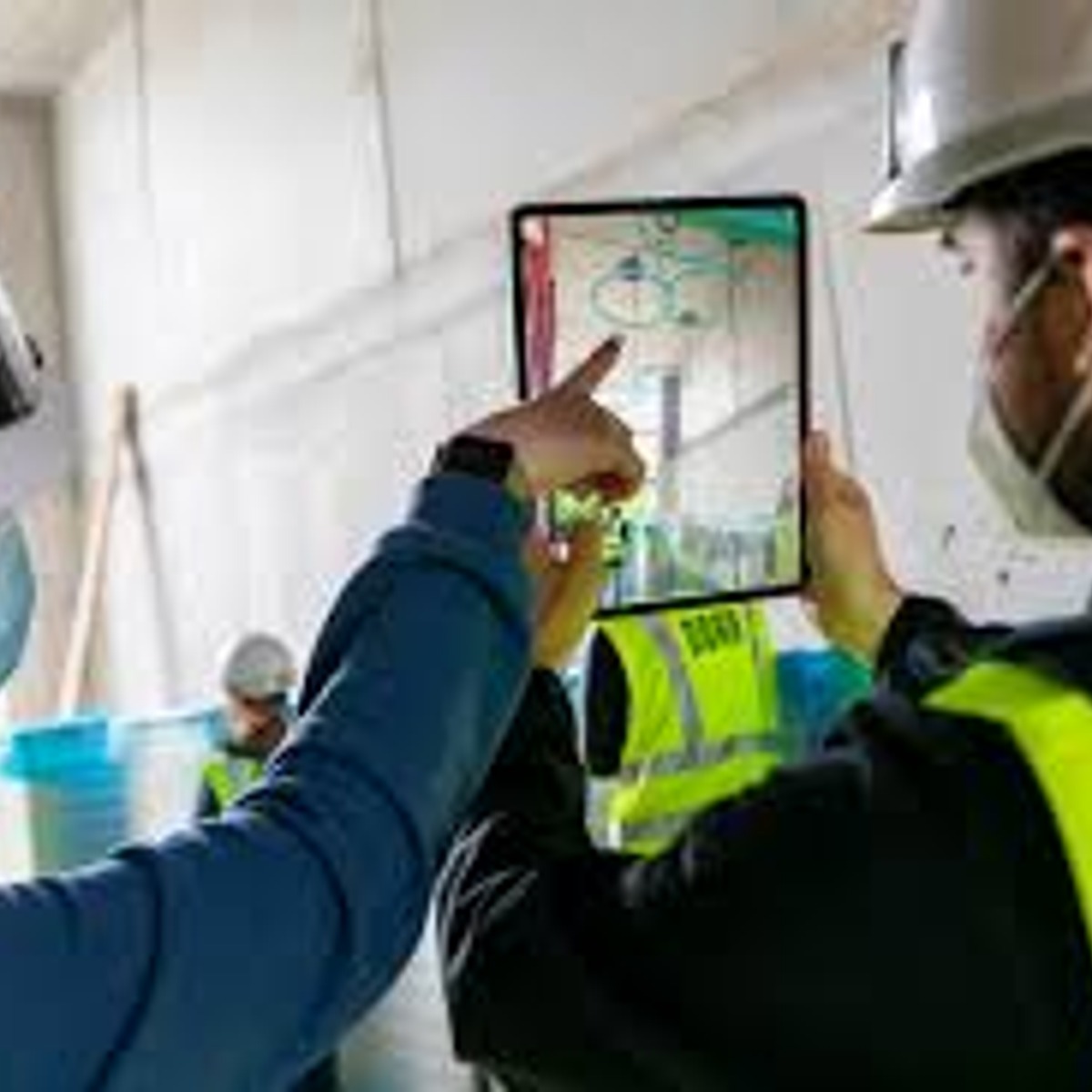

Description : In this course, you will understand the practical applications of Building Information Modeling (BIM) with reference to field applications, 4D BIM, and 5D BIM. "Documentation & Common Data Environment (CDE)" covers ISO 19650 standards, including networking (LAN, WAN, cloud computing), CDE concepts, file naming conventions, BIM team roles, and RFI and review processes. "Introduction to 4D BIM/Field BIM" addresses construction scheduling, Gantt charts, and integrates 3D BIM models into 4D modeling with practical demonstrations and workflows for comparing planned versus actual schedules and generating reports. "Application of Field BIM/4D" focuses on collaboration, site utilization planning, 3D control and planning, safety protocols using BIM and CDEs, digital fabrication, scan-to-BIM processes, existing condition modeling, and as-built record models. "Introduction to 5D, AIM" introduces 5D BIM and Asset Information Modeling (AIM), covering quantity takeoff methods, cost breakdowns, COBie, space attributes, and facility management integration for efficient project delivery and asset management. "Beyond BIM - Emerging Trends" explores industrial construction techniques, IoT, Big Data, data analytics, AI, ML applications, and Digital Twin technology, expanding your understanding of cutting-edge BIM applications and trends. Target Learners: • Undergraduate students of Civil Engineering, Electrical Engineering & Mechanical Engineering • Post-Graduate Students in Construction Management. • Practicing Engineers involved in BIM in construction. • Faculties in Civil, Electrical & Mechanical • Industry professionals working in construction and BIM • Project managers and consultants in construction and infrastructure development sectors. Prerequisites: • Basic knowledge of Construction • Familiarity with Construction Management • Understanding of Construction Practices Hardware Prerequisites: Minimum Entry level configuration as follows: 1. Operating System: 64-bit Microsoft® Windows® 10 or Windows 11 2. CPU Type: Intel® i-Series, Xeon®, AMD® Ryzen, Ryzen Threadripper PRO. 2.5GHz or Higher. 3. Memory: 8 GB RAM 4. Video Display: 1280 x 1024 with true color (Minimum) 5. Disk Space: 30GB free disk space Software Prerequisites: • Install Revit 2020 and higher versions for this course

Description : This course introduces the types of cost estimation from the conceptual design phase through the more detailed design phase of a construction project. In addition, the course highlights the importance of controlling costs and how to monitor project cash flow. Learners will work on a break-even analysis of construction tasks in a project. The course begins with Professor Odeh providing an overview of what will be covered. Next, learners explore the stages of design in a construction project. Professor Odeh then describes the types of cost estimates in a construction project, and the tools and methods used to create estimates. By the end of this course, you will be able to: -Acquire the fundamentals of cost estimation and the design phase to perform cost estimation -Learn about cost control and cost control methods, emphasizing the Earned Value Method or EVM -Understand the close out period of the project by exploring the punch lists, final approval, and turnover to the client

Description : In this course, we will explore the foundational principles of Building Information Modeling (BIM) and its practical applications, starting with the evolution of engineering from traditional 2D drawings to the shift towards object-based modeling, which forms the core of BIM. This understanding sets the stage for examining real-world implementations across diverse sectors including airports, residential and commercial buildings, water treatment plants, substations, transportation, and material handling facilities. We begin with BIM fundamentals through case studies demonstrating its role in enhancing efficiency and collaboration in complex projects. Moving forward, our focus shifts to Design Authoring workflows aligned with ISO 19650 standards, preparing participants for hands-on experience with Autodesk Revit. We explore Revit's user interface comprehensively, covering menus, ribbons, and key concepts such as Revit extensions, parameters, worksets, phases, design options, schedules, annotations, and sheet creation. Finally, participants delve into practical BIM modeling within Revit across architecture, structural, and MEP disciplines, equipping them with essential skills to create detailed and integrated BIM models across disciplines. Join us on this journey to master BIM fundamentals and discover its transformative potential in engineering and construction. Target Learners: • Undergraduate students of Civil Engineering, Electrical Engineering & Mechanical Engineering • Post-Graduate Students in Construction Management. • Practicing Engineers involved in BIM in construction. • Faculties in Civil, Electrical & Mechanical • Industry professionals working in construction and BIM • Project managers and consultants in construction and infrastructure development sectors. Prerequisites: • Basic knowledge of Construction • Familiarity with Construction Management • Understanding of Construction Practices Hardware Prerequisites: Minimum Entry level configuration as follows: 1. Operating System: 64-bit Microsoft® Windows® 10 or Windows 11 2. CPU Type: Intel® i-Series, Xeon®, AMD® Ryzen, Ryzen Threadripper PRO. 2.5GHz or Higher. 3. Memory: 8 GB RAM 4. Video Display: 1280 x 1024 with true color (Minimum) 5. Disk Space: 30GB free disk space Software Prerequisites: • Install Revit 2020 and higher versions for this course


14.10 Hours
Description : This course collection focuses on mastering AutoCAD Civil 3D for civil engineering projects. It covers designing residential projects, gravity and pressure pipe systems, and managing data workflows. Additionally, it provides expertise in topographic and boundary surveys, as well as plan production, enabling professionals to efficiently handle diverse civil design tasks.
28.70 Hours
Description : This course collection focuses on advanced techniques for architectural and structural design using Revit, Archicad, and Dynamo. It includes training on creating construction drawings, worksharing for collaboration, and modeling best practices for BIM in Revit. Learners will also explore Revit's industrialized construction and structural families, as well as Archicad architectural design techniques and workflows with Revit. Additional courses cover Revit schedules, creating construction documents, and an introduction to using Dynamo for automating tasks, enhancing design efficiency and collaboration across projects.
8.80 Hours
Description : This course collection focuses on civil and architectural design using Revit and AutoCAD Civil 3D. It includes training on designing a multi-trade commercial building in Revit, along with essential site design and basic roadway design techniques in AutoCAD Civil 3D. These courses equip learners with the skills to handle complex design projects in both architecture and civil engineering, focusing on integrated design workflows.